Basant Panchami, also written as Vasant Panchami, marks the arrival of spring in many parts of India. It usually falls in the month of Magha (January–February) and is considered highly auspicious for starting new ventures, beginning education, or initiating creative projects.

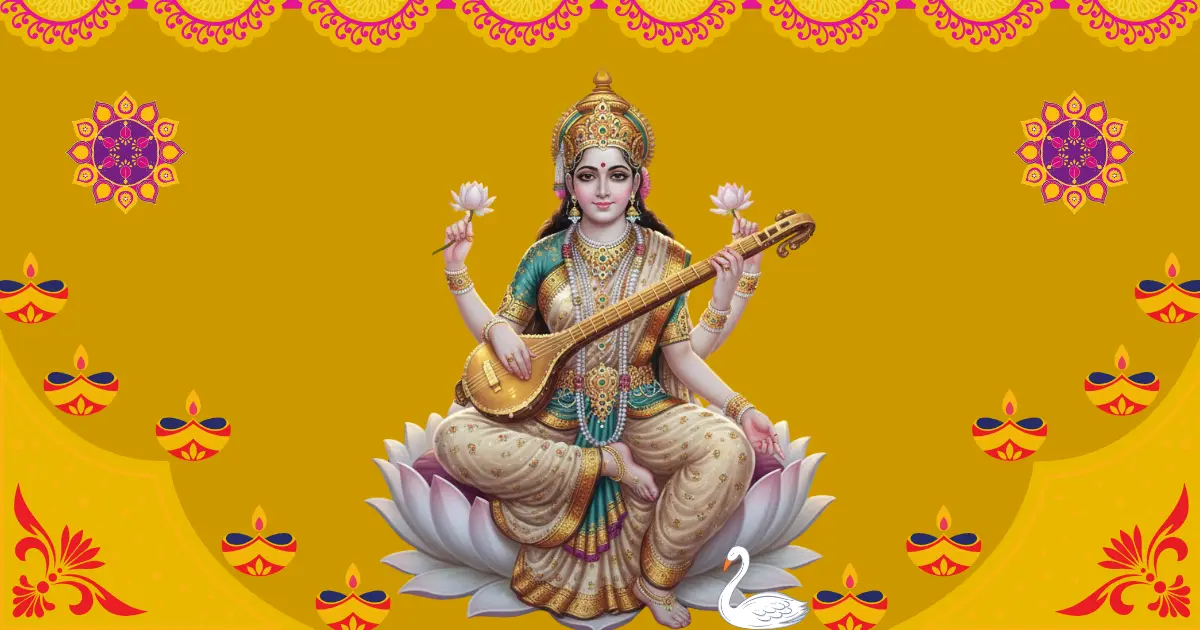
On this day, people worship Maa Saraswati, dress in yellow, prepare seasonal dishes, and offer prayers for wisdom, clarity and creativity.
Table of Contents
The Meaning and Spiritual Essence of Basant Panchami
Basant Panchami marks the arrival of spring (basant ritu) according to the Hindu calendar. Spiritually, spring represents renewal, growth, and clarity. Just as fields prepare for new crops, the human mind is encouraged to prepare for new learning and positive thoughts.
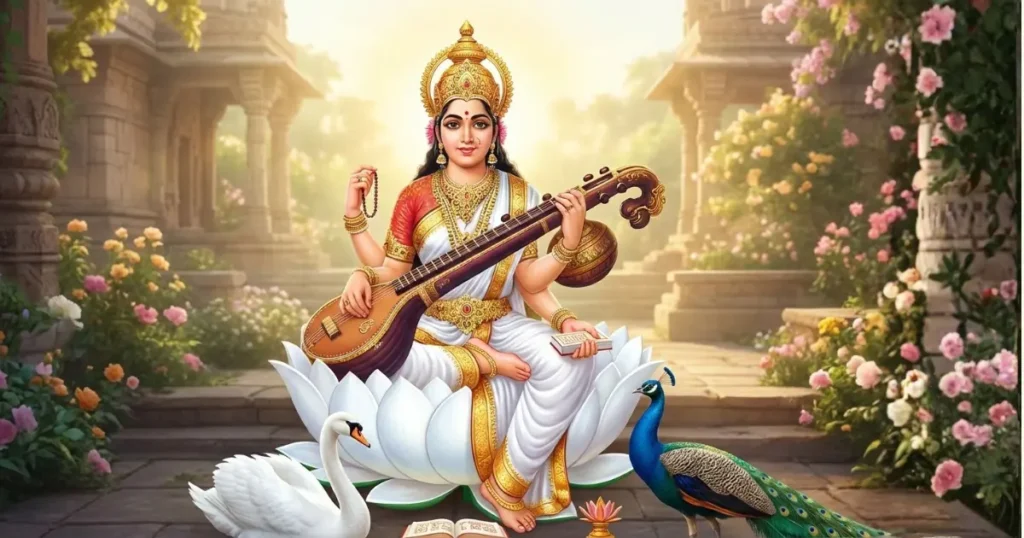
The festival is dedicated to Goddess Saraswati, who symbolises purity of thought, speech, and action. Worshipping her on this day is believed to remove ignorance and guide one toward true understanding. Many people see Basant Panchami as the perfect day to start new studies, creative work, or spiritual practices.
Yellow, the dominant colour of the festival, stands for wisdom, energy, and prosperity. From flowers to food, yellow fills homes and temples, creating an atmosphere of peace and optimism.
Spiritual Significance of Basant Panchami
At its core, Basant Panchami is a reminder to move from dullness to freshness – from inner winter to inner spring.
- Maa Saraswati represents pure knowledge, refined intellect, music, art, and truthful speech.
- Spring represents renewal, growth, and the blossoming of new life after the stillness of winter.
When both come together in this festival, the message is clear:
cleanse the mind of negativity, invite higher thoughts, and nurture your talents. Many parents choose Basant Panchami as the day for “Vidya‑arambh” – the first time a child writes letters or touches books with a prayerful heart.
How Basant Panchami Is Celebrated Across India
Although the essence remains the same, Basant Panchami is celebrated in diverse ways in different regions:
North India
People wear yellow clothes, decorate homes with yellow flowers, and prepare dishes made with saffron, gram flour, or turmeric. Schools organise special Saraswati puja and cultural programs where children sing bhajans and perform dances.
Eastern India (West Bengal, Odisha, Bihar)
Saraswati Puja is celebrated with great enthusiasm. Idols of Maa Saraswati are installed in homes, clubs and schools. Students place their books, musical instruments, pens, and tools at the goddess’s feet, seeking blessings for success in studies and arts.
Western India
In some regions, kites are flown to enjoy the pleasant spring breeze. Families gather on terraces and open fields, combining celebration of Basant Panchami with light outdoor fun.
Northern Plains and Punjab
The festival is associated with mustard fields in bloom. Many people do simple puja at home, offer prayers, and enjoy seasonal foods, soaking in the beauty of early spring.
This diversity gives you scope, as a blogger, to write region‑specific sections while still keeping Basant Panchami as the central anchor keyword.
Basant Panchami and Saraswati Puja: Rituals and Puja Vidhi
For many households and educational institutions, Basant Panchami is almost synonymous with Saraswati Puja.
A simple Saraswati Puja at home usually includes:
Altar Preparation
Place an image or idol of Maa Saraswati on a clean cloth (often yellow or white). Keep books, notebooks, pens, instruments, or tools you use for learning and work nearby.
Offerings (Bhog and Puja Items)
Flowers (especially yellow or white), fruits, sweets, incense, diya, and sometimes soaked gram or seasonal dishes are offered. Many people offer boondi, kesar milk, or simple homemade prasad.
Mantra and Aarti
Devotees chant Saraswati mantras, sing bhajans and perform aarti. Children often participate by reading a small prayer or singing.
Books and Study Materials
Some people do not read or write during the main puja hours, as books are placed at the goddess’s feet. They resume study after the puja, symbolically “receiving” knowledge as prasād.
For an SEO‑friendly article, combining “Basant Panchami”, “Saraswati Puja”, “Saraswati Puja vidhi” and “Basant Panchami rituals” throughout the section works very well.
Colours, Food and Symbols of Basant Panchami
The festival is full of visual and symbolic elements that make it fun and meaningful:
Yellow Colour
Yellow is considered the main colour of Basant Panchami. It represents ripening mustard fields, the warmth of sunlight and the vibrancy of spring. People wear yellow outfits, offer yellow flowers, and cook yellow‑coloured sweets and rice dishes.
Traditional Foods
Depending on the region, popular dishes include sweet saffron rice, boondi, kesari halwa, kheer, malpua, or simple home‑style khichdi. Seasonal fruits and jaggery‑based sweets are also common.
Books and Instruments
Books, pens, musical instruments, brushes, cameras, and laptops – any tools linked with learning and creativity are placed near Maa Saraswati, acknowledging that all knowledge flows from her grace.
Flowers and Rangoli
Homes and temples are decorated with rangoli and fresh flowers. This not only beautifies the space but also symbolises inviting positive energy.
These details help your readers visualise the festival, making your Basant Panchami article more engaging and shareable.
Basant Panchami Wishes and Messages for 2026
No notes on Basant Panchami are complete without thoughtful wishes readers can copy, paste or adapt for messages and social posts. Here are some examples you can sprinkle into your content:
- “Happy Basant Panchami! May Goddess Saraswati bless you with clarity of thought, sweet speech and creative inspiration.”
- “On this Basant Panchami, may your books become your best friends and your efforts turn into beautiful achievements.”
- “May the soft sunshine of Basant Panchami melt away your worries and bring new beginnings into your life.”
- “Wishing you a colourful, joyful and wisdom‑filled Basant Panchami with your family and friends.”
You can build an entire sub‑section of 20–30 wishes in Hindi and English to increase the practical value of your article and boost chances of ranking for “Basant Panchami wishes” and related queries.
Basant Panchami for Students, Creators and Professionals
Beyond rituals, Basant Panchami carries powerful practical lessons:
For Students
It is the perfect day to set study goals, organise notes, and start a new subject or skill. Writing a small personal prayer or affirmation to Maa Saraswati can become a yearly ritual.
For Artists and Creators
Musicians, writers, designers and content creators can treat this as a creativity reset day: start a new project, compose a tune, sketch, write a blog outline, or script a video.
For Professionals
Professionals can use Basant Panchami as a reflection point:
- What new skill can I learn this year?
- How can I communicate more clearly and kindly?
- What mental clutter can I clear to think better?
Adding such practical angles gives your article unique value and helps it stand out from generic festival write‑ups.
Let Basant Panchami Be Your Inner Spring
Basant Panchami is much more than yellow clothes and festive photos. It is an invitation to renew your mind, nurture your talents and welcome wisdom into daily life. Whether you are a student, artist, professional or homemaker, this day gently whispers: start again, learn again, and express your best self.
If you’re writing or sharing about Basant Panchami:
- Encourage your readers to do at least one small Saraswati‑related act – reading, writing, practising an art, or teaching someone.
- Add a simple call to action: ask them to share their favourite Basant Panchami memory, wish, or ritual in the comments.
- Invite them to pass on a meaningful wish to at least one child or student in their life.
Small acts like these keep the spirit of Basant Panchami alive beyond a single day and turn a seasonal blog post into a genuine source of inspiration.
Read in hindi here : Basant Panchami in hindi
FAQs About Basant Panchami
1. When is Basant Panchami celebrated, and how is the date decided?
Basant Panchami is celebrated on the fifth day (Panchami) of the bright half of the Magha month in the Hindu calendar, usually in January or February. The exact date changes each year based on the lunar calendar. In 2026, Basant Panchami celebrated on 23 January.
2. Why is the yellow colour important on Basant Panchami?
Yellow symbolises mustard flowers, sunlight and the warmth of spring. People wear yellow clothes, prepare yellow dishes and offer yellow flowers to Maa Saraswati as a mark of joy and positivity.
3. What is the connection between Basant Panchami and Saraswati Puja?
Many traditions regard Basant Panchami as the birthday or special day of Maa Saraswati. Hence, Saraswati Puja is performed to seek blessings for knowledge, music, art, and good speech, especially by students and educational institutions.
4. Is Basant Panchami only for students?
No. While students and teachers celebrate it enthusiastically, Basant Panchami is for anyone who values learning, creativity and clarity of mind—professionals, artists, homemakers, entrepreneurs, and children alike.
5. How can I celebrate Basant Panchami simply at home?
You can keep a picture of Maa Saraswati, light a diya, offer flowers and a simple sweet, read or chant a short prayer, and spend some time learning or practising something new. Wearing yellow and sharing a kind wish with others adds to the joy of the day.
(Disclaimer: This text is based on general beliefs and material available on the internet. publicreact.com does not confirm it.)
Note: If you find any errors in the above article or have some suggestions to improve the article, please tell us through comments or email, and we will adopt your suggestions on priority. Thank you!